

10 min read
Last updated First published 29 July 2026
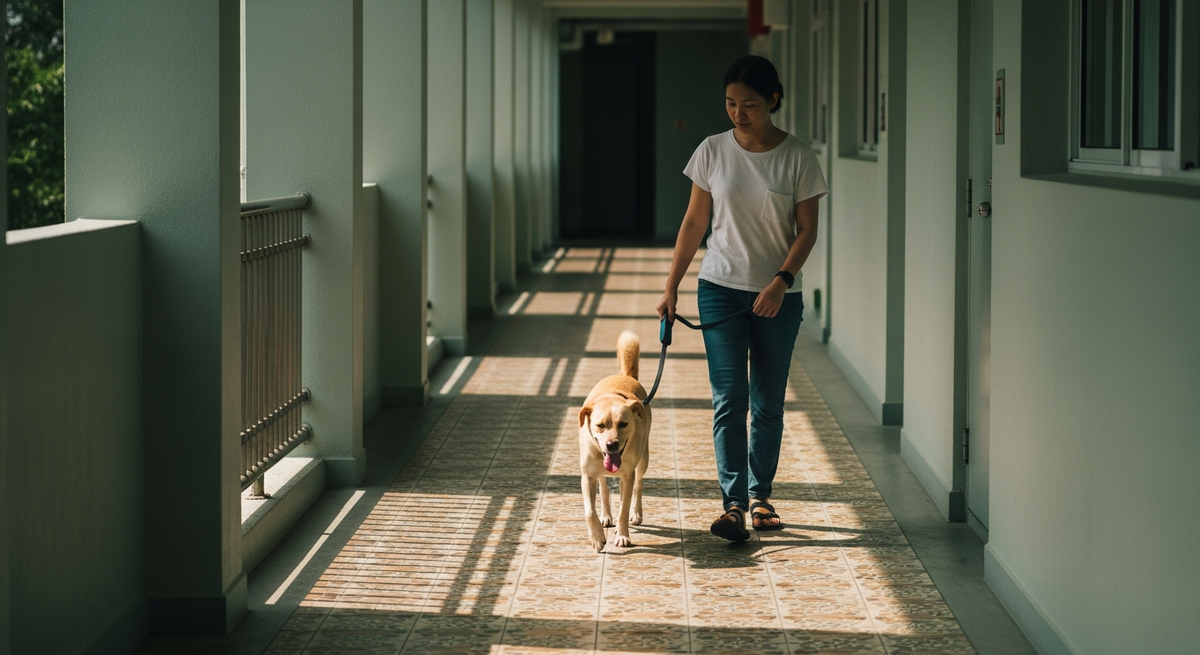
If your dog has gone missing or you have found a stray, Singapore's AVS portal is the official reporting channel for both situations. Acting within the first hour and knowing the 14-day shelter hold window can make the difference between a reunion and a missed chance.
If your dog has just bolted or you've spotted a stray in your estate, the next hour matters enormously, and we want to make sure you know exactly what to do.
Lost-dog situations in Singapore split into two distinct tracks: you have found a dog that isn't yours, or your own dog has gone missing. The steps overlap in places, particularly around AVS reporting and microchip checks, but the urgency and sequence differ. This guide walks through both tracks clearly so you can act without wasting time.
Track one: you have found a stray dog
Approach safely before anything else
Do not chase the dog. A frightened animal that is already disoriented will bolt further if pursued, and in Singapore's road-heavy HDB estates, that significantly raises the risk of a traffic accident. Instead, crouch low, avoid direct eye contact, and stay still. If you have food, place it on the ground a short distance away and let the dog come to you at its own pace.
Once the dog is calm enough to approach, check for a collar tag with a contact number. If there is one, call it immediately. If there is no tag, or the number is out of service, your next step is a microchip scan.
Getting the dog scanned
AVS recommends taking a found pet to a vet for a microchip scan. Call ahead about safe handling and any fee. Do not rely on this guide’s former Mount Vernon shelter address. A registered chip can help AVS trace the owner, but it is not a guarantee of immediate contact.
If the dog is injured, call the SPCA animal rescue line at 6287 5355. For injured wildlife found alongside the dog, the ACRES wildlife rescue line (9783 7782) handles wild animals specifically. For domestic strays, the SPCA's rescue and investigation line is the right call.
Reporting the stray to AVS
Contact the Animal Response Centre on 1800 476 1600 and follow its advice. AVS’s found-pet instructions ask for location and identifying details, notification to welfare groups and a microchip check. A report does not guarantee immediate collection or a particular shelter outcome.
Official source: Stray dog reports, the lost pet portal, and AVS licensing information are all managed through the Animal and Veterinary Service. File reports and check the status of found animals at avs.nparks.gov.sg.
This guide has not established a universal 14-day shelter holding rule. If you find or lose a dog, contact AVS promptly and ask about the individual case. Do not wait on an assumed deadline or make promises about rehoming outcomes.
What you are not required to do
You are not legally obligated to take the dog home. If you cannot safely contain the animal, report the location to AVS and, if possible, stay nearby to guide the collection team. Posting in your estate's WhatsApp group or Telegram channel to alert neighbours can help someone who knows the dog reach it faster.
Track two: your own dog is missing
The first hour
Start promptly and keep sightings organised. A frightened dog’s movements are unpredictable; do not assume it will remain within a particular radius. Work through these steps in parallel, not sequentially:
- Alert your immediate neighbours, especially those on the same floor and the floors above and below.
- Post in your estate-specific Facebook group or Telegram channel with a clear photo, your dog's name, last seen location, and your contact number.
- Post in the larger community lost-and-found groups: SOSD (sosd.org.sg), ASD, and the SPCA all maintain active lost and found boards, either on their websites or social media pages.
- Inform your nearest AVS-contracted shelter so they can flag your dog's description if it comes in.
Leave an item of your clothing or your dog's bedding near the last known location. The familiar scent can anchor a disoriented dog nearby.
Filing an official AVS lost pet report
Log a missing dog report using the official AVS lost-pet guidance at avs.nparks.gov.sg. This creates an official record that shelter staff can match against any found dogs brought in. Include your dog's microchip number, AVS licence number, breed, colour, weight, and any distinguishing markings. Keep the report updated if your dog is found.
Your AVS licence number is on your annual licence certificate. If you need a reminder of how licensing works, our guide to AVS dog licensing covers the renewal cycle and what details are held on the register.
Checking the community databases
Several Singapore rescue groups maintain Airtable-based or spreadsheet databases of found dogs reported by the public, updated in near-real time. These are separate from the AVS system and are often faster to search in the immediate aftermath of a disappearance. Check:
- The SOSD lost and found listings on their website and Facebook page.
- ASD's community lost pet boards.
- The SPCA found animals page, which is updated when animals are brought into their shelter.
- Purely Adoptions and OSCAS community channels, which frequently reshare lost dog posts.
Cross-post your report across all of these. A single post in one group reaches a fraction of the people who might recognise your dog.
The 14-day hold period: what it means in practice
AVS explains collection of impounded animals from the Animal Management Centre at 57 Sungei Tengah Road, by appointment. Call the Animal Response Centre for instructions, current fees and the documents needed; different organisations may have different procedures.
To reclaim a dog, you will need to:
- Provide proof of ownership, which may include photos, vet records, or your AVS licence documentation showing the dog's microchip number.
- Pay any outstanding boarding fees incurred during the holding period.
- Settle any AVS licensing arrears if your licence has lapsed.
Keep identification, licence details and ownership evidence ready, but do not delay reporting while gathering a perfect file. Tell AVS what you have and follow its instructions.
If the 14-day period has already passed
Keep following up with AVS and relevant welfare organisations. Ask about the actual animal and current situation rather than assuming an outcome from the number of days elapsed.
If your dog has been adopted out and you can establish prior ownership, the process becomes considerably more complicated and may require legal advice. Prevention through microchipping and current licensing is far simpler than retrieval after the fact.
Why microchipping changes the odds significantly
Microchipping is mandatory for all dogs in Singapore under AVS regulations. A chip registered to your current contact details means that any vet clinic or shelter that scans the dog can reach you within minutes. Dogs without chips, or dogs whose chip details have not been updated after a change of address or phone number, lose that advantage entirely.
The chip itself is worthless if the database record is stale. Log in to the AVS system after any change of address, phone number, or ownership and update your details. It takes less than five minutes and it is the single most effective thing you can do to improve reunion odds.
For more on what good preventive ownership looks like from a cost and compliance perspective, our first-year cost breakdown covers microchipping and licensing fees alongside the broader picture of what dog ownership in Singapore actually costs.
Practical prevention: reducing the risk before it happens
Most lost-dog incidents in Singapore happen at predictable moments: a lift door opening unexpectedly, a gate left unlatched, a retractable lead that runs out at the wrong time on a void deck. A few habits reduce these risks substantially:
- Use a fixed-length lead in lift lobbies and void decks. Retractable leads give dogs enough range to bolt before you can react.
- Fit a properly sized harness rather than a collar-only setup. Dogs under stress can slip collars, particularly narrow or loosely fitted ones.
- Ensure your gate and door habits are consistent, especially in households with children or regular visitors who may not share your awareness.
- Carry a recent clear photograph of your dog on your phone at all times. You will need it the moment something goes wrong.
If you are considering adoption and want to understand what responsible ownership involves before a dog comes home, our guide on adoption versus buying from a breeder covers what rescue groups and AVS expect of owners through the rehoming process.
Frequently asked questions
How do I report a stray dog in Singapore?
File a stray dog report using the official AVS lost-pet guidance at avs.nparks.gov.sg. You can also call the SPCA rescue line at 6287 5355 if the animal is injured or in immediate danger. Provide the exact location, a description of the dog, and any photos you can safely take.
How long does AVS hold a stray dog before rehoming it?
Do not rely on a universal holding period. Contact AVS immediately, ask about your animal and follow the specific reclaim instructions. This guide’s earlier 14-day assurance was not established by the official guidance.
My dog has gone missing in Singapore. What should I do first?
In the first hour, alert your immediate neighbours, post in your estate's community groups and larger rescue networks like SOSD and the SPCA, and file a missing dog report via the AVS portal at avs.nparks.gov.sg. Call your nearest AVS-contracted shelter to flag the dog's description so they can match it if the dog is brought in.
Can I check if my lost dog has been taken to a shelter in Singapore?
Yes. Check the AVS lost pet portal, the SPCA found animals listings at spca.org.sg, and the community lost-and-found boards maintained by SOSD and ASD. Calling the shelters directly is often faster than waiting for online listings to be updated, particularly in the first 24 to 48 hours.
Is microchipping really mandatory for dogs in Singapore?
Yes. Under AVS regulations, all dogs in Singapore must be microchipped and licensed. The microchip number is linked to the owner's contact details on the AVS register, which is how shelters and vet clinics identify and reunite lost dogs with their owners. Keeping your registered contact details current is just as important as the chip itself.
What happens if I cannot safely contain a stray dog I have found?
You are not required to physically contain the dog. Report the precise location to AVS via the portal or call the SPCA rescue line, and stay nearby if it is safe to do so in order to guide the collection team. Alerting your estate's community groups to watch for the dog can also help keep track of its movements until help arrives.
We know how frightening it is the moment you realise your dog is gone, and we hope this guide helps you move quickly and calmly through a situation where every hour counts.
More for Singapore dog owners
-
 HDB barking complaints: how to manage your neighbour situation A neighbour complaint about your dog's barking is serious in an HDB context, but it is a problem with a clear pathway through it. This guide covers how to identify the cause, reduce the noise now, manage a formal complaint if one has been filed, and when to bring in professional help.
-
 Vet bills in Singapore: what to expect and how to plan Plan veterinary spending around your dog: ask for written estimates, compare the scope of care, understand insurance terms and prepare for unexpected bills.
-
 Singapore dog vaccination schedule, explained Core vaccines, puppy timing, leptospirosis, kennel cough, titre testing, and how your AVS licence connects to it all. Here is what Singapore dog owners actually need to know about keeping jabs current and records straight.
-
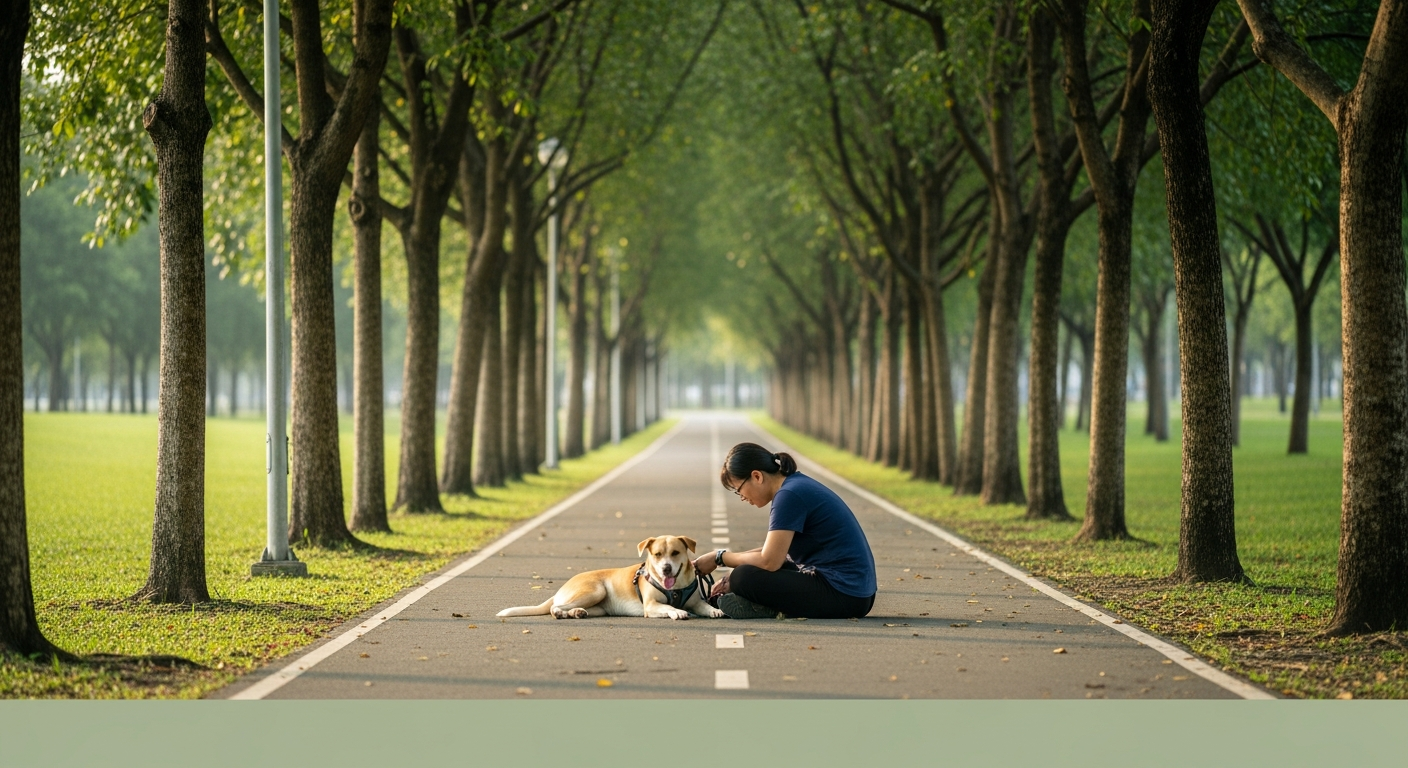 Your rescue dog's first 30 days in Singapore Bringing a rescue dog home is a different experience from raising a puppy, and the first 30 days require patience more than training. This guide covers what to expect during the decompression period, from the first quiet hours in a HDB flat to the point where your dog genuinely starts to feel at home.