
Adoption questions and home preparation for your dog
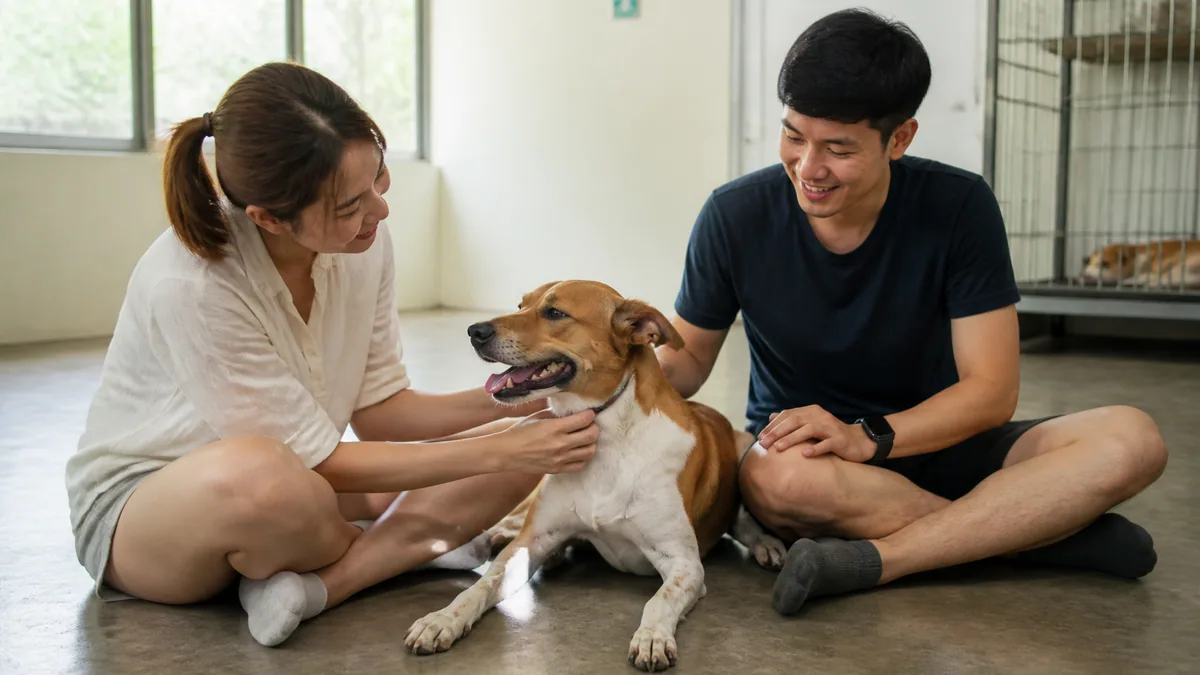
Use this checklist with everyone who will care for your dog, including helpers, tenants and a backup carer. Walk through the home together before arrival. Agree who will complete each action and recheck it after repairs, moves or changes in routine.
Download the dog adoption and home checklist (PDF). It includes space for notes, responsibilities and follow-up questions. No account is needed.
Walk through the home
- Start at the front door. Check latches and barriers and agree who secures the animal before the door opens. Include visitors, cleaners and delivery routines.
- Check every window and balcony. Use secure, suitable barriers and inspect fixings, edges and gaps. Do not rely on ordinary insect mesh or supervision alone to prevent falls. Move climbable furniture away from openings; furniture movement does not replace a barrier.
- Prepare the care spaces. Plan secure lead/harness and transport arrangements, suitable toileting opportunities, quiet rest and walks adjusted to the individual dog and conditions. Ask about grooming, mobility and known triggers. A senior or small dog is not automatically easy to care for.
- Secure hazards. Put medicines, cleaning products and unsuitable foods away. Check loose cables, bins and small swallowable objects. Ask your vet about plants or products you cannot identify confidently.
- Test the routine. Walk through feeding, cleaning, departure and bedtime with the carers. Agree how to record concerns and who can take the animal to a vet.
SPCA’s FY2023/24 report describes a dog rescued from a high ledge (printed page 34). Its 2025 welfare report describes a fatal dog fall through an ungrilled window, with a sofa described as a probable route (page 20). These are individual dog cases. The window and exit checks here are preventive household guidance adapted for dogs, not a claim about the frequency of falls.
Questions before agreeing to adopt
- Health: What records, diagnoses, medicines and follow-up appointments are available? What remains unknown? Ask the vet about likely continuing care and costs.
- Behaviour and routine: What has the rescue observed around people, animals, handling, separation and toileting? In what setting? What support is available if home behaviour differs?
- Process: Who must attend visits? Is a home check or homestay required? What does the agreement say about care, returns, support and responsibility during a trial?
- Costs: What does the fee include? What is separate, such as licences, training, home preparation, medicines or future treatment?
- Housing and records: Confirm the applicable housing rules and permissions, microchip information, licence or transfer steps, and the first-time owner course where required.
- Training: Ask whether the organisation requires a course for this animal, which providers qualify, the deadline and who pays. Dog obedience rules must not be applied to cats.
A daily care and backup plan
Write down feeding and medication instructions, fresh-water and cleaning checks, rest, movement/play and grooming needs. Name the primary and backup carer for each task. Leave the vet’s contact, transport plan and emergency authority with the backup carer. Confirm the carer can actually perform the tasks, including during workdays and holidays.
Use the budget calculator to separate setup, ongoing spending and emergency savings. If paying for care is becoming difficult, use the financial-help guide early. For urgent illness or injury, use emergency veterinary help.
Continue with the detailed dog home-care guide and adoption guidance. The checklist records decisions; it is not a housing approval or medical assessment.
Sources
Current SPCA adoption process; SPCA annual reports; SPCA 2025 welfare report. Source review: 23 September 2026.