
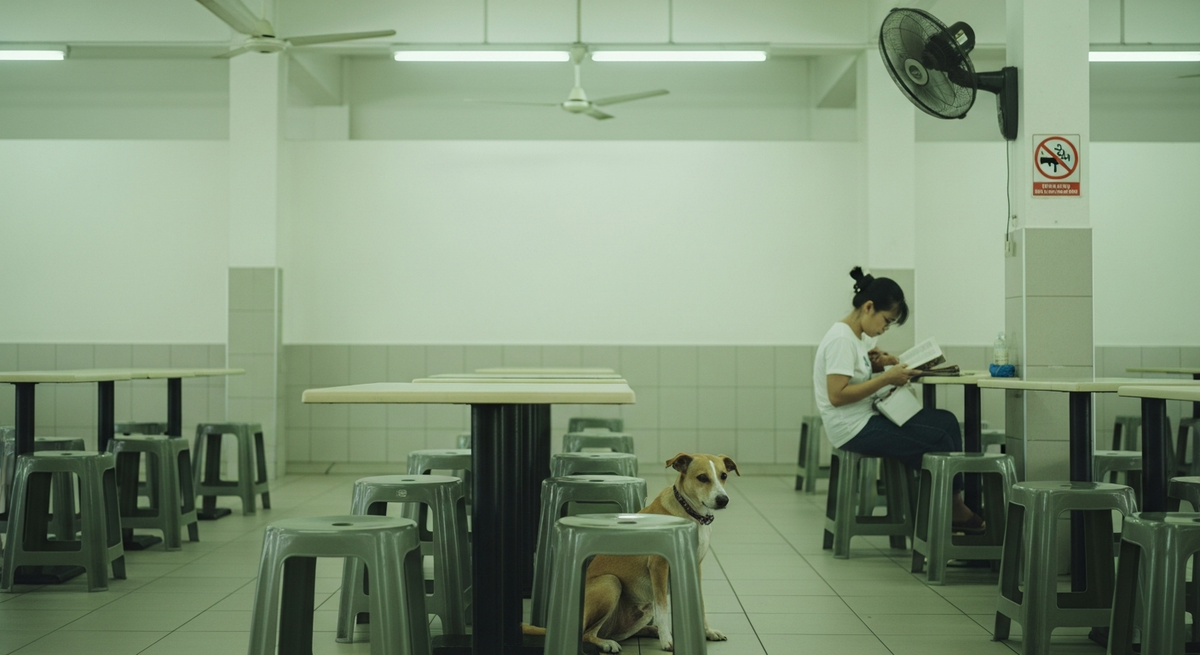

Singapore's Park Connector Network gives HDB dogs access to more than 350 km of green, low-traffic walking corridors. This guide covers the five routes most useful to HDB owners, how to walk them safely in Singapore's heat, and what to bring.
11 min read · Updated 11 September 2026
A daily walk can offer more than a quick pavement loop. A suitable park connector gives your dog time to sniff and explore while you keep the route manageable. Choose the actual access point, shade and turnaround distance for your dog, rather than assume every green route is quiet or pet-friendly.
Official Singapore source
Animal and Veterinary Service: dog licensing
What the PCN actually is
The Park Connector Network links green spaces across Singapore. A route can include road crossings, exposed stretches or diversions, so use the current map rather than assume an uninterrupted traffic-free corridor. Check the rules for each park or trail you enter.
For a dog owner living in an HDB block, the PCN is one of the most underused resources available. Most of us default to the same pavement loop around the estate, past the coffee shop and back. The PCN offers something the estate pavement simply cannot: sustained green ground, varied textures, water smells, bird sounds, and the kind of low-stimulus environment where a dog can actually settle into a walk rather than react to every passing bus.
The full PCN map is available on the NParks website and through the NParks Parks & Waterbodies Map online. I'd recommend bookmarking the map on your phone before your first outing.
Why it matters specifically for HDB dogs
HDB living is full of sensory interruptions: lift lobbies with unpredictable strangers, void decks that echo, pavements right beside traffic. Dogs who walk the same concrete routes daily can become habituated to stress rather than relaxed. The ambient noise and proximity to cars keeps their arousal baseline higher than it needs to be.
An open path can offer more room to create distance from cyclists, dogs or people, but it is not automatically calm. Watch your dog’s whole body and willingness to explore. A lower tail position alone does not prove relaxation; a tucked tail or freezing can signal discomfort.
There's also a practical benefit around reactivity. If your dog is still working on staying calm around strangers or other dogs, a wide, open corridor with better sightlines gives you more space to manage distance than a narrow HDB pavement does. If that's something you're actively working on, the guide on loose-leash walking for HDB dogs is worth reading alongside this one.
The leash rule, clearly stated
NParks permits dogs in most parks and connectors, with important exclusions, including nature reserves, specified nature-park networks and trails leading into reserves. Check the planned route before leaving. Where dogs are permitted, keep them leashed unless you are inside an authorised off-leash area; a connector does not become off-leash because it is quiet.
Keep the lead manageable so your dog cannot cross the full width of a shared path. A fixed lead can make that easier than a retractable one, but handling and available space matter. Keep a comfortable slack when possible, shorten safely near other users and leave room for cyclists to pass.
Owners must also clean up after their dogs. Bring more poop bags than you think you need. Bag dispensers are not reliably stocked on all stretches.
Five routes worth knowing
1. Punggol Waterway Park connector (north-east)
This is the one I'd send a first-timer to without hesitation. The waterway connector runs alongside the Punggol Waterway, with a wide, flat path, good lighting, and open sightlines in both directions. For a nervous dog, the predictability of the environment matters: fewer sudden transitions, no sharp corners where a cyclist appears from nowhere, and the soft sound of water running alongside the path.
For the Punggol route, use a known access point on the current map and choose a short out-and-back section at first. Do not rely on our previous unsourced bench directions or promises of an empty path at a particular time. Adjust to the crowd and your dog’s comfort on the day.
2. Bishan-Ang Mo Kio Park connector (central)
Bishan-Ang Mo Kio Park offers river-side paths and room to vary a walk. Shade changes with the sun, and exposed sections can still be hot. Choose a route you can shorten, stay out of the water when conditions are unsafe and follow any park notices.
It connects into Bishan-Ang Mo Kio Park, which is large enough that you can vary your loop. The park itself gets busy on weekend mornings, so weekday early walks are calmer. This route suits dogs who have done a few PCN walks already and are comfortable with moderate foot traffic.
3. Bedok Reservoir connector (east)
At Bedok Reservoir, check the actual path surface and shade rather than assume a cool walk at a fixed hour. Keep your dog away from the water’s edge and give other users room. A short sniffing route can be worthwhile without completing a full reservoir circuit.
Parking near Bedok Reservoir Road is available if you are driving in from elsewhere in the east. The connector also links back into Bedok Town Park, which adds distance if you want a longer outing.
4. Rail Corridor, Buona Vista to Clementi stretch (west)
The Rail Corridor follows the route of the old KTM railway line. The Buona Vista to Clementi section retains some of the most atmospheric stretches: old bridges, dense secondary vegetation pressing in on both sides, and a narrow, quiet path that feels genuinely removed from the city around it. Dogs seem to find this level of sensory richness engrossing. The smells are different here from any waterway corridor.
Be aware that sections of the Rail Corridor can be uneven underfoot, particularly after rain when the earthen parts get muddy. Older dogs or dogs with joint issues may find the flat waterway routes more comfortable. Check the NParks Rail Corridor page for current access and any temporary closures before you go.
5. Coney Island connector from Punggol (north-east)
The path along the north coast of Punggol leading to Coney Island is one of the quieter routes accessible from an HDB town. Off-peak on weekday mornings, you can walk long stretches with almost no other users. The vegetation is naturalistic, the light is different from the open waterway, and the dogs I've seen here tend to walk with their noses low and their pace unhurried.
Coney Island itself is open to leashed dogs. The island's interior paths are shaded and earthy. It is worth arriving early: by 9am on weekends it gets genuinely busy with cyclists. Weekday mornings before 8am are the version I'd recommend.
Heat and timing on PCN routes
A park connector can still be too hot for a walk. Prefer cooler conditions and check the surface, shade and your dog’s tolerance; there is no universally safe clock window. A hand check can identify a hot surface, but cannot establish that the whole walk is safe. The RSPCA’s hot-weather guidance explains the need to adapt activity.
On earthen sections of the Rail Corridor and Coney Island, surface temperature is lower than on paved connectors, but air temperature and humidity still determine whether the walk is safe. Short-nosed breeds, elderly dogs, and heavily coated dogs need the earlier end of that morning window. If you want more detail on working out your specific dog's heat window, the heat-safe training windows guide covers this properly.
Bring a portable bowl and enough water for both of you, with a plan to turn back rather than rely on a drinking point. Needs vary with the dog, conditions and exertion; our previous personal water-volume anecdote was not a suitable guide for every dog.
What to bring on every PCN walk
- Portable collapsible water bowl and sufficient water for the whole route
- At least three poop bags, more on a longer walk
- ID-tagged collar on your dog, AVS licence tag attached. Details on AVS dog licensing if yours isn't current
- Charged phone with the NParks map bookmarked or downloaded
- A fixed leash of 1.2 to 1.8 metres, not a retractable
- A small treat pouch if your dog is still building confidence on new routes
PCN etiquette with cyclists
Cyclists share most PCN routes and they can move quickly and quietly. When you hear a bell signal from behind, move your dog close to the left side of the path immediately. Shorten the lead so it does not cross the path width. Do not wait to see how far away the cyclist is: by the time you can see them clearly they are often closer than you expect.
A few practical habits that help:
- Walk on the left as a default, not in the centre
- Keep the lead manageable, with comfortable slack, so your dog cannot drift across the path
- At bends and bridge approaches, slow down and keep your dog close
- If your dog tends to lunge or spin when surprised, position yourself between the dog and the direction the cyclist is coming from
Most cyclists on PCN routes are considerate, but the speed differential between a walking dog and a road bike is significant. Keeping left and keeping the lead short makes the whole corridor safer for everyone using it.
How regular routes calm dogs down over time
A familiar route can make planning easier, but there is no promise that a dog will become calm after a set number of walks. Keep notes on what your dog finds comfortable and which locations or times cause difficulty. Gradual, manageable experiences are more useful than repeatedly walking through an overwhelming situation.
This is especially relevant for newly adopted dogs. If you have recently brought a rescue home, a short, consistent PCN route walked at the same time each morning is one of the most useful things you can do in the first few weeks. The new rescue first 30 days guide covers how to build that kind of routine from the start.
For a first visit, choose a nearby permitted path with an easy exit, check current notices and keep the walk short enough to finish comfortably. Let your dog sniff without pulling them towards crowds or wildlife. Repeat a route if it suits your dog, and change the plan if it does not; no particular third walk guarantees improvement.
You can browse more walking locations and green space options across Singapore on the UDO places directory.
Frequently asked questions
Are dogs allowed off-leash on any part of Singapore's Park Connector Network?
No. NParks regulations require dogs to be on a leash at all times on PCN routes. There are no off-leash sections or voice-command exceptions within the connector corridors. Some parks connected by the PCN have their own rules, but the connector paths themselves require leashes throughout.
What is the best PCN route for a nervous or reactive dog in Singapore?
Choose a permitted route with room to create distance, a manageable surface and an easy way home. Punggol may be an option, but crowds and conditions vary. Start with what your dog can cope with rather than assume one route is best for every nervous dog.
What time should I walk my dog on PCN routes in Singapore to avoid the heat?
Choose cooler conditions rather than fixed hours. Check ground heat, humidity, shade, exertion and your dog’s health. A hand test only checks the surface; it does not guarantee a safe walk. Shorten or postpone the outing when conditions are unsuitable.
Where can I find the full NParks PCN map?
The full PCN map is available on the NParks website under Gardens, Parks and Nature, and through the NParks Parks and Waterbodies Map online. You can access it at nparks.gov.sg. Bookmarking the map on your phone before heading out is worthwhile, as some connector sections pass through areas with limited mobile signal.
Are dogs allowed on Coney Island, Singapore?
Yes, leashed dogs are welcome on Coney Island. The island's interior paths are shaded and earthy, which most dogs find engaging. Weekday mornings before 8am are considerably quieter than weekend visits. Bring your own water as there are no guaranteed water points inside the island.
Do I need to carry my dog in the lift in HDB blocks before reaching the PCN?
HDB rules require dogs to be leashed in void decks, lift lobbies, and common corridors. Some estate management bodies additionally require dogs to be carried in lifts, though this varies by block. Check your own estate's posted rules. Once you reach the PCN, the leash-only rule applies throughout the connector route itself.
More dog-friendly guides
-
 HDB barking complaints: how to manage your neighbour situation A neighbour complaint about your dog's barking is serious in an HDB context, but it is a problem with a clear pathway through it. This guide covers how to identify the cause, reduce the noise now, manage a formal complaint if one has been filed, and when to bring in professional help.
-
 Vet bills in Singapore: what to expect and how to plan Plan veterinary spending around your dog: ask for written estimates, compare the scope of care, understand insurance terms and prepare for unexpected bills.
-
 Singapore dog vaccination schedule, explained Core vaccines, puppy timing, leptospirosis, kennel cough, titre testing, and how your AVS licence connects to it all. Here is what Singapore dog owners actually need to know about keeping jabs current and records straight.
-
 Your rescue dog's first 30 days in Singapore Bringing a rescue dog home is a different experience from raising a puppy, and the first 30 days require patience more than training. This guide covers what to expect during the decompression period, from the first quiet hours in a HDB flat to the point where your dog genuinely starts to feel at home.